

Wool-Free Base Layers for Sensitive Skin
Shop Base Layers
Wool base layers have earned their place in the mountains, but they are not the right fit for every body.
For some people, even soft wool can feel itchy, warm in the wrong way or distracting once it is layered under ski gear. A wool-free base layer offers a different kind of comfort: soft against the skin, breathable when you start moving and warm when the temperature drops.
No scratch. No bulk. Just a first layer that helps the whole day feel easier.
Yes, you can stay warm without wool.
A good wool-free base layer should still do the things you want from a thermal layer. It should feel soft, keep warmth close, move with your body and help manage moisture when you are active.
The difference is how it feels against your skin.
If wool makes you itchy, scratchy or uncomfortable, a wool-free thermal base layer can be a more comfortable alternative for skiing, snowboarding, hiking, travelling and cold-weather days outside.
Look for wool-free base layers that are:
• Soft against sensitive skin
• Warm without feeling bulky
• Breathable
• Moisture-wicking
• Quick-drying
• Stretchy enough to move in
• Comfortable under ski gear or winter layers
• Easy to wash and wear again
The layer closest to your skin should feel the best.
Wool works beautifully for many people. It is warm, naturally insulating and often used in outdoor clothing for good reason.
But comfort is personal.
Some people find wool itchy because of how the fibres feel against their skin. Others may not notice it at first, but start to feel irritated once they are warm, moving or wearing several layers over the top.
That is when a base layer can become distracting.
Instead of thinking about the view, the snow or the next run, you start thinking about the itch at your neck, the scratch on your arms or the way the fabric feels once you begin to warm up.
For people with sensitive skin, that small discomfort can shape the whole day.
Merino wool is often described as softer than traditional wool, and for many people it is. Plenty of skiers and outdoor lovers wear merino happily.
But “soft” does not always mean comfortable for every skin type.
Some people still find merino itchy. Others find it too warm, too textured or simply not what they want sitting directly against their skin all day.
That does not mean wool is bad. It just means wool is not universal.
A base layer is personal. It sits closest to your body, underneath everything else, for hours at a time. If the fabric does not feel good there, it probably will not matter how technical it sounds on paper.
A good wool-free base layer should not feel like a compromise.
It should still perform in cold weather. It should still help you stay warm. It should still move with you when you ski, walk, bend, sit, layer up and cool down again.
The best wool-free thermals focus on comfort first, then performance that supports it.
Soft against your skin
This is the most important place to start.
If you are looking for base layers for sensitive skin, the fabric needs to feel smooth and comfortable from the moment you put it on. No scratch. No roughness. No feeling like you want to take it off as soon as you get inside.
Softness matters because base layers are not occasional layers. They are all-day layers.
Warm without bulk
Warmth does not need to feel heavy.
A good base layer should keep warmth close to your body without adding unnecessary bulk under ski pants, jackets or winter layers. Too much bulk can restrict movement, bunch up and make your outerwear feel tighter than it should.
The aim is simple warmth you can move in.
Breathable when you start moving
Cold days are not always still days.
When you ski, hike, walk or travel in cold weather, your temperature changes. You may feel chilly at first, then warm once you start moving, then cold again when you stop.
A breathable wool-free base layer helps you feel more comfortable through those changes.
Moisture-wicking and quick-drying
A base layer should help move moisture away from your skin.
This matters because damp fabric can quickly feel cold once you stop moving. Moisture-wicking, quick-drying base layers are especially helpful for skiing and snowboarding, where the day often moves between effort, rest, chairlifts and changing temperatures.
Stretch and easy movement
A good base layer should move with you, not against you.
It should feel close to the body without feeling restrictive. You should be able to bend, stretch, sit down, walk in ski boots and layer over it comfortably.
The best base layers are the ones you forget you are wearing.
Skiing asks a lot from a first layer.
You get dressed early. You move between warm accommodation, cold air, lift queues, chairlifts, active runs and lunch stops. You may sweat, cool down, layer up, unzip, then feel cold again in the space of one day.
This is where wool-free ski base layers can work beautifully.
They offer comfort against the skin while still giving you the warmth, stretch and breathability needed for mountain conditions.
They are especially helpful if you have ever found traditional thermals:
• Itchy at the neck or wrists
• Too warm once you start moving
• Bulky under ski gear
• Scratchy after a few hours
• Uncomfortable against sensitive skin
• Hard to keep wearing all day
A good wool-free base layer should not dominate the day. It should quietly support it.
No. That is part of what makes them useful.
Wool-free base layers can be worn for skiing and snowboarding, but they also make sense beyond the mountain.
They can work for:
• Cold morning walks
• Winter hikes
• Travel days
• Layering under coats
• Outdoor work
• Chilly school runs
• Après-ski and resort days
• Cold houses and slow winter mornings
The best base layers are not pieces you wear once and forget about. They become the layers you keep reaching for when the temperature drops.
That matters because value is not only about one ski trip. It is about how often something earns its place in your wardrobe.
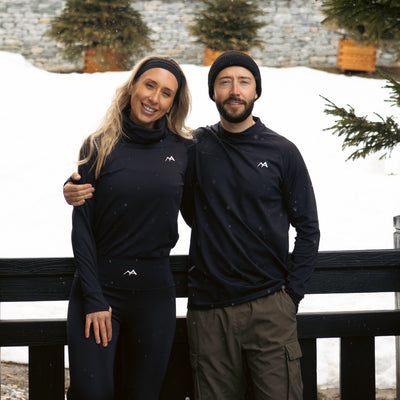
Arctic Eco-Sno base layers are designed for people who want the warmth of a thermal layer without the itch of wool.
The range is wool-free and made using recycled materials, with a soft, smooth feel against the skin. Each piece is designed to layer easily under ski gear, move with the body and offer warmth without unnecessary bulk.
The focus is comfort first: how the layer feels when it goes on, how easily it moves, and whether it can be worn for the whole day without becoming a distraction.
For skiing, snowboarding and cold-weather days outside, Arctic Eco-Sno base layers are made to feel soft, breathable and practical from the first lift to the last run.
If you are choosing wool-free thermals, it helps to think about how and where you will wear them.
For skiing and snowboarding
Choose base layers that are warm, breathable and close-fitting enough to sit smoothly under ski gear. Avoid anything too thick or loose, as it may bunch under ski pants or jackets.
For sensitive skin
Prioritise softness. If the fabric feels scratchy when you first try it on, it is unlikely to feel better after several hours of wear.
For travel
Look for pieces that are easy to pack, easy to layer and quick to dry. A good base layer can work on the mountain, on the plane and on cold days between activities.
For everyday winter wear
Choose base layers that feel comfortable enough to keep on after the activity ends. The more wearable they feel, the more useful they become.
There can be a quiet assumption that wool-free means less technical or less suitable for the outdoors.
That is not the case.
A well-designed wool-free base layer can still offer warmth, breathability, stretch and moisture management. The difference is that it does so without relying on wool fibres.
For anyone who loves wool, wool may still be the right choice. For anyone who finds wool distracting, irritating or uncomfortable, wool-free base layers offer another way in.
Performance should not come at the cost of comfort.
Before choosing a wool-free base layer, ask:
• Does it feel soft against my skin?
• Is it warm without feeling heavy?
• Will it sit smoothly under my ski gear?
• Does it have enough stretch to move with me?
• Is it breathable for active days?
• Is it moisture-wicking and quick-drying?
• Will I wear it beyond one ski trip?
• Does it feel like something I would be happy to keep on all day?
If the answer is yes, you are probably choosing well.
Wool is a trusted outdoor fabric, but it is not the only way to stay warm.
If wool makes you itchy, scratchy or uncomfortable, a wool-free base layer can make cold-weather dressing feel much easier.
The right base layer should feel soft against your skin, breathable when you work harder and warm when the temperature drops. It should move with you, layer easily and make the day feel more comfortable from the very first layer.
No itch. No bulk. No distraction. Just comfort you can count on.
Explore soft, wool-free base layers made using recycled materials, designed for warmth, comfort and easy layering under ski gear.